

Most pages about a home sauna give you adjectives and a list of links. I wanted something you can check, so every spec and price here traces back to a page I opened, and where a listing left a gap I say so. The comparison table above puts all 11 saunas I cover side by side, so I won't repeat it. This page covers the decisions that come before you pick a model: which type, where it goes, what your house has to supply and what it really costs. I haven't tested any of these, and I describe what makers and sellers say, not what I've felt in a cabin.
Types of home saunas
When people ask about the types of saunas, they usually mean how the heat is made. A traditional sauna uses an electric or wood-burning stove that heats stones, and pouring water on them makes steam. An infrared cabin uses emitters that warm you directly, and a steam room uses a generator that boils water into vapor. Peak Saunas, a retailer, lists about 150–195°F for traditional, 120–150°F for infrared and 100–120°F for steam. Other sources give different bands, and my sauna temperature guide lines them up with each source named.
| Type | How it heats | Typical air temperature (one retailer) | Electrical picture |
|---|---|---|---|
| Traditional | Electric or wood stove, stones, water for steam | 150–195°F | Electric heaters run on 240V: 30A breaker for 4.5 kW up to 50A for 9 kW |
| Infrared | Emitters warm the body directly | 120–150°F | Smaller units often 120V/15A plug-in, larger ones may need 20A or 240V |
| Steam | Generator makes vapor, high humidity | 100–120°F | I found no sourced figure |
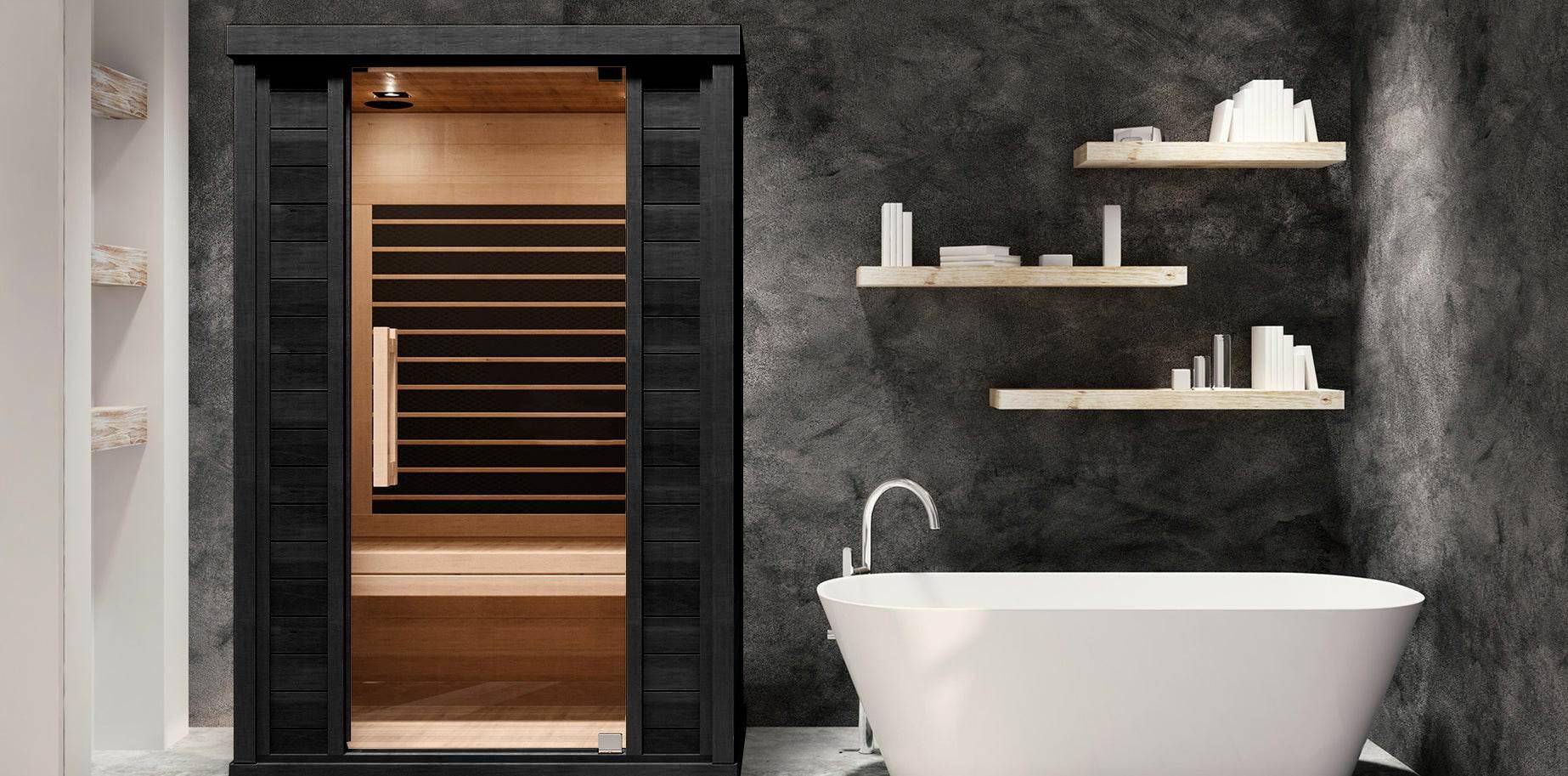
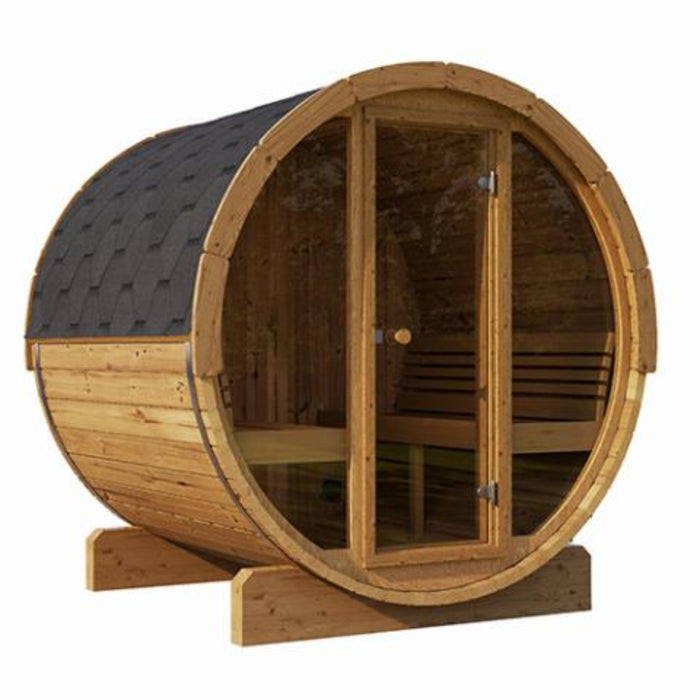
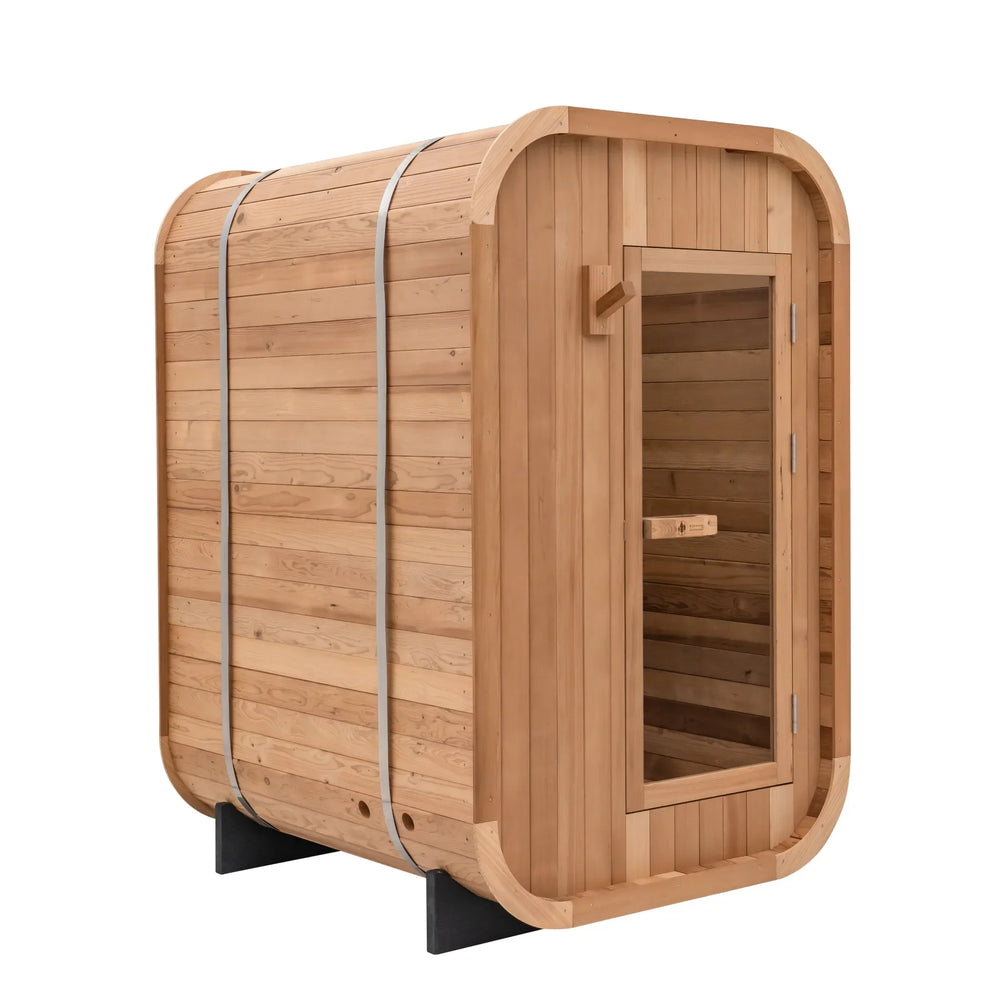
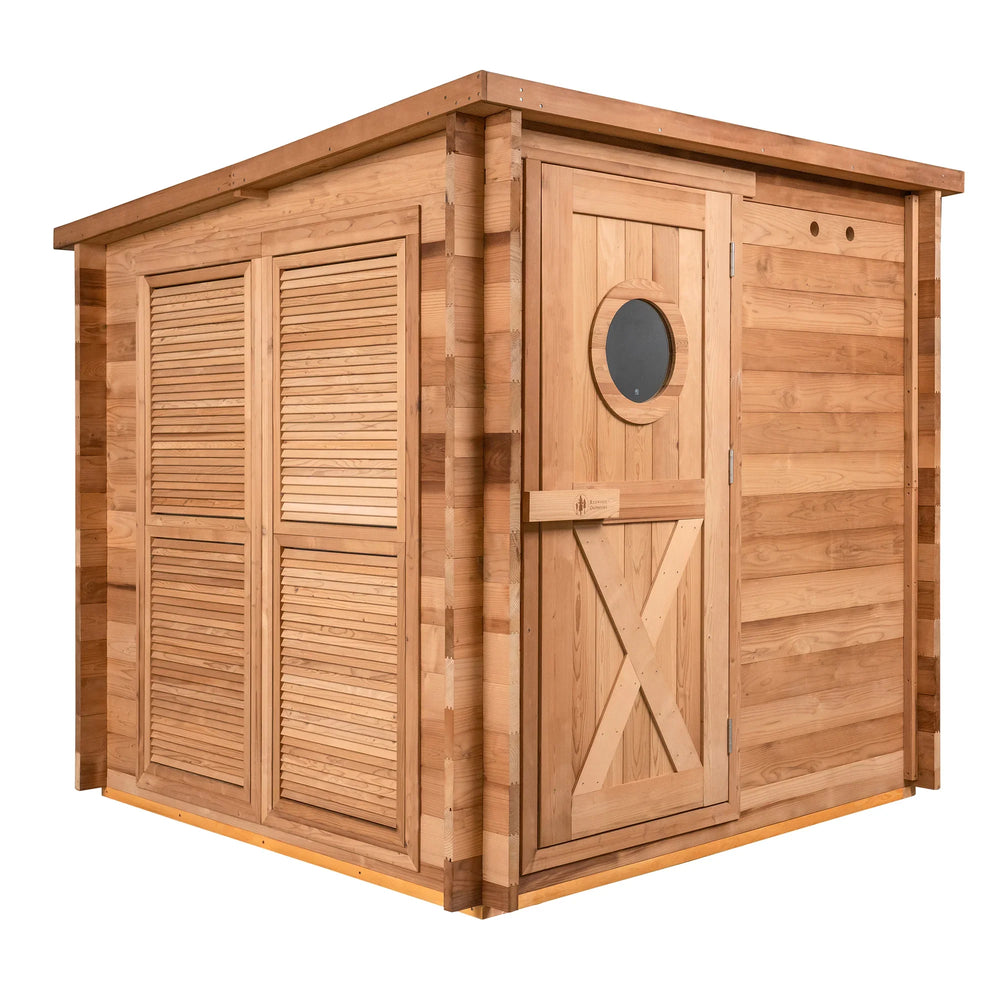
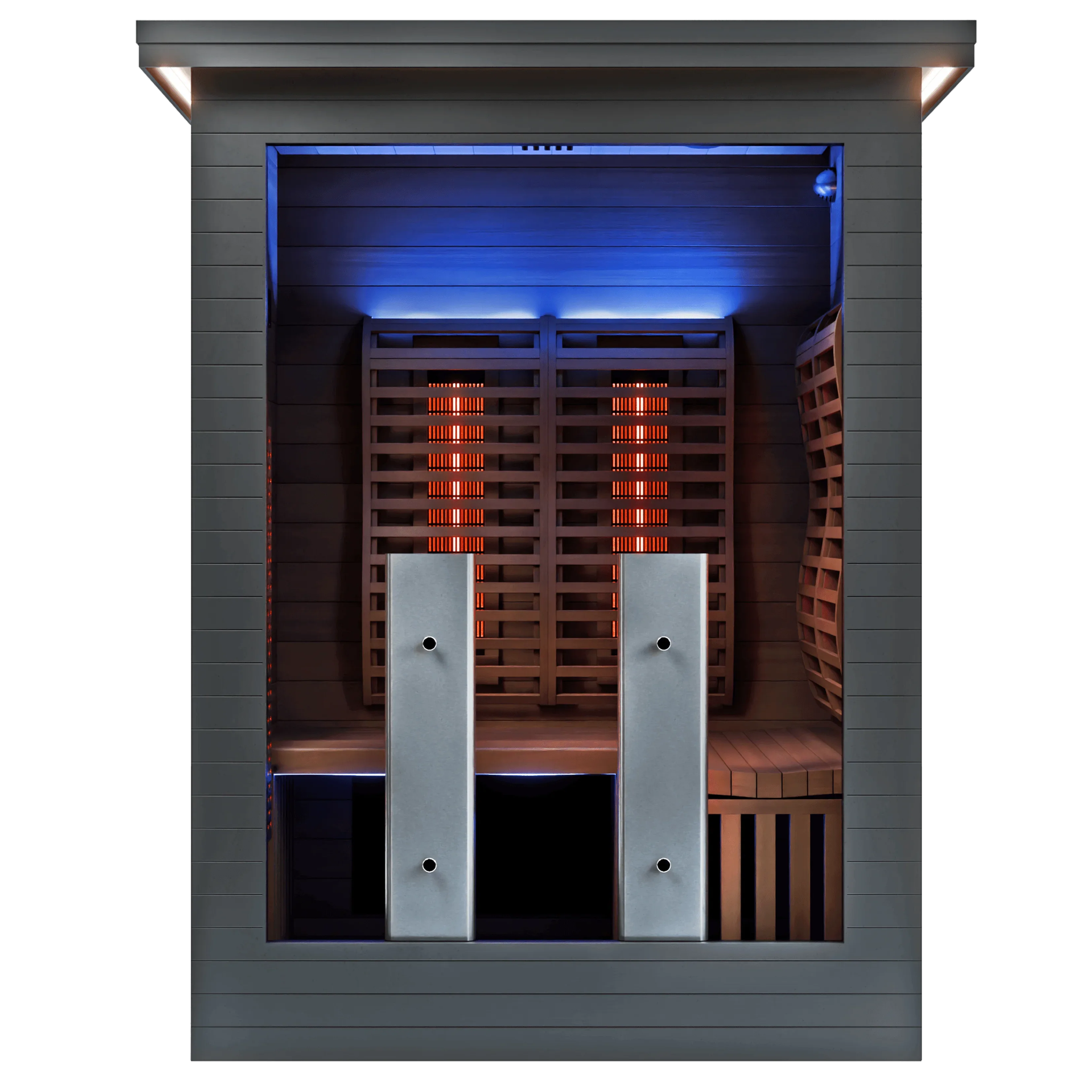
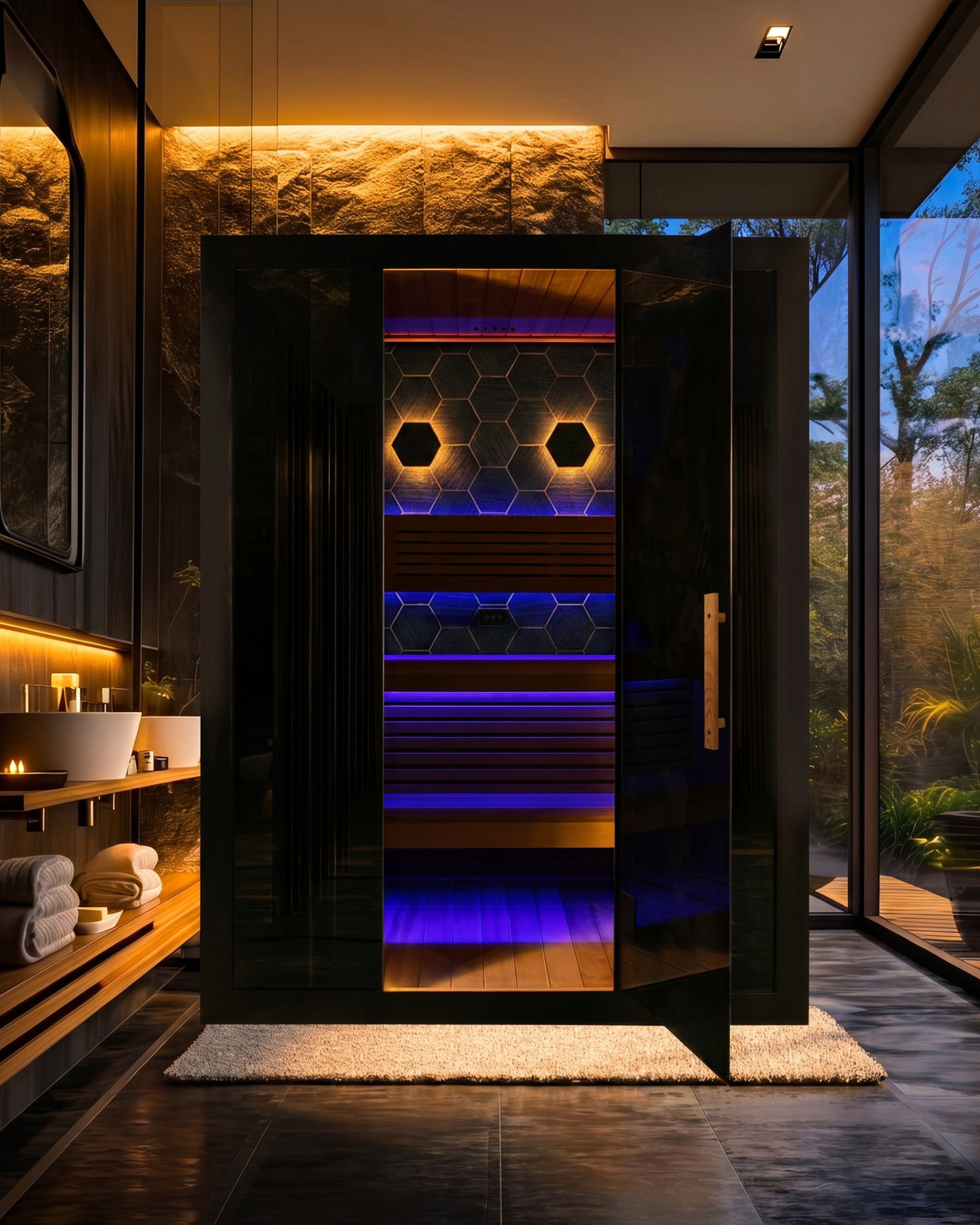
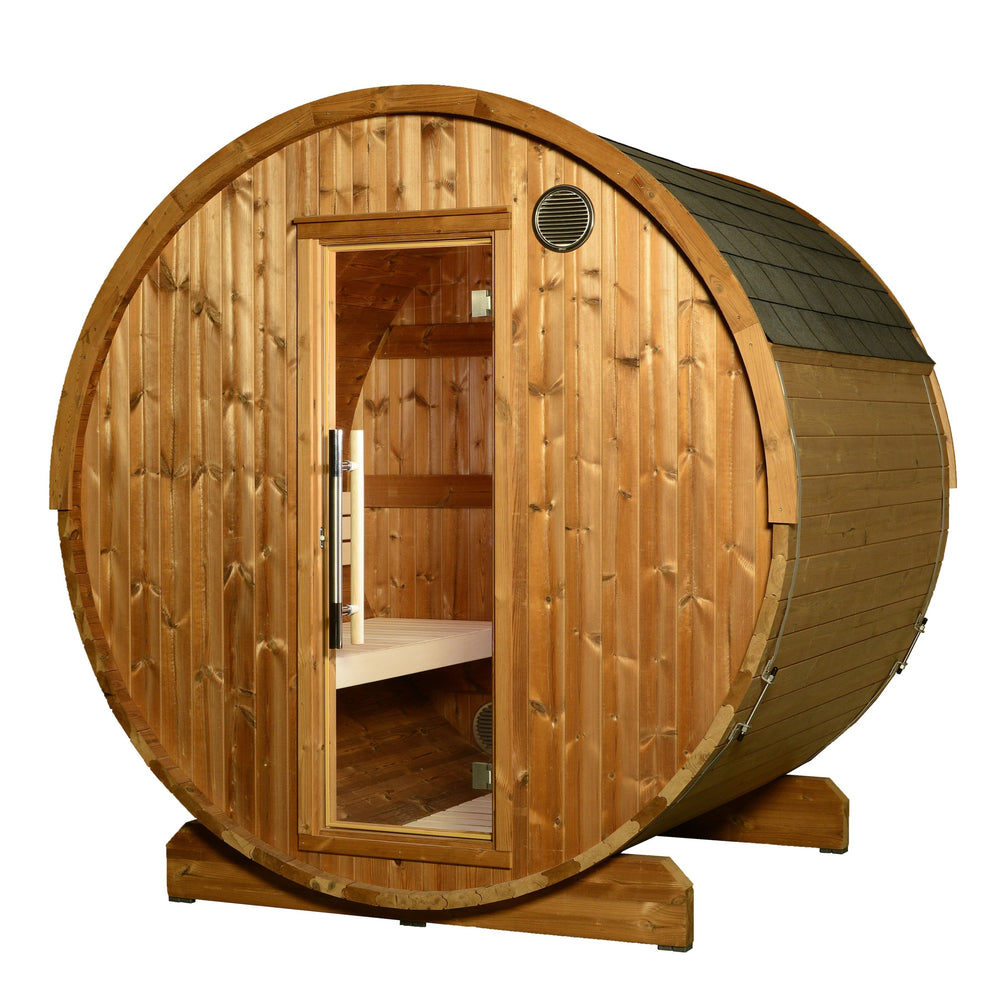
Two more terms matter in a shop, and they describe the shape and not the heat. A barrel or cabin is usually an outdoor kit with a stove or an electric heater. An indoor cabin is a finished room you put in a basement, garage bay or spare room. In the comparison table, the Backyard Discovery Lennon, Dundalk Tranquility, SaunaLife E7G and G4, Redwood Outdoors Duo and Garden, ALEKO barrel and Almost Heaven Kuuma are traditional outdoor builds. The Sun Home Nova is a traditional indoor cabin, and the Equinox is an indoor infrared one. The Luminar is an outdoor infrared cabin.
I don't cover a steam room model, so I can't tell you which steam setup to buy. If steam is your goal, a traditional cabin gets you löyly (the burst of steam from water on stones) without a separate generator, which is the route most of the models above take.
If you're still choosing between the two main heat types, read my infrared vs traditional sauna comparison before anything else. The short version is that the choice is mostly about your electrical panel, and then about whether you want hot air and steam or a cooler, drier cabin.
Indoor sauna or outdoor sauna
An indoor sauna sits inside your home envelope. That protects the wood from weather and puts the sauna steps from a shower, but it asks more from the room. Sun Home, which sells both, says an indoor setup needs ventilation work that an outdoor one doesn't, and it lists $1,000–$3,000 for HVAC integration and $400–$1,200 for exhaust fans on indoor installs. Those are one maker's ranges, and its indoor total of $8,000–$30,000 against $5,500–$18,000 outdoors is far above the sticker prices I found, so read it as a seller's planning figure and not a quote.
An outdoor sauna avoids the ventilation question and the floor-load question inside the house. It brings its own: a base, a longer electrical run, weather, and delivery to a yard. Sun Home's outdoor guide lists a compacted gravel pad at $100–$400 and a concrete slab at $800–$2,000, and it says delivery is usually curbside freight, so you move the pieces from the driveway to the final spot. It also lists an electrician at $500–$800 when the panel is 10–25 feet away and $1,200–$2,500 or more for 50–100 feet or trenching.
My rule of thumb: choose outdoor if you have a flat spot near the panel and don't want to cut into a finished room. Choose indoor if the nearest outdoor option needs a long trench, or if you want to walk to it in January without putting on boots. Neither is better in the abstract. The ALEKO barrel's listing says it can be used indoors or outdoors, which shows that the line between the two isn't always sharp, though I'd confirm that with the seller in writing before using it inside.
If you're leaning outdoors, my best outdoor sauna page goes through eight of the models in the table one by one.
What to look for in a home sauna
This is the buying-guide part, in the order I'd check things: size, power, space and access, assembly, and warranty.
Size and seats
Listings give capacity as a range, and the range is generous. The table above shows Lennon at 2–4, Dundalk at 2–6, ALEKO at 3–4, Kuuma at 4–6, and single numbers for the Duo (2), Equinox (2), Luminar (2, per its name), Nova (3) and Garden (8). I plan around the low end of any range, because a four-person bench with four adults on it is a tight session.
Interior size tells you more than the seat count. The E7G lists an interior 63 inches long by 77 inches in diameter, and the Kuuma lists a 62⅝-inch bench. Divide the bench length by the number of people you plan to seat and judge whether that feels right to you.
Seats also change cost per seat. By my arithmetic, the Equinox at $6,099 for 2 is about $3,050 a seat, the Duo at $7,899 for 2 is about $3,950, and the Nova at $12,499 for 3 is about $4,166 and the Garden at $10,399 for 8 is about $1,300. Those figures say nothing about quality, since the three are different types.
Power and electrical
This is the part that turns a purchase into a second project. A traditional electric heater is a 240V appliance. One guide pairs a 4.5 kW heater with a 30A breaker, a 6 kW heater with 30–40A, 8 kW with 40A and 9 kW with 50A, and tells you to defer to the heater's own manual. The same guide says hardwiring a 240V heater isn't a DIY job and calls for a licensed electrician.
The models in the table show the spread:
- Dundalk's 6 kW electric option lists 240V with a 25/30A breaker and 10-gauge wire.
- The Lennon's 9 kW heater lists a 240V/50-amp connection.
- The Kuuma lists 240V with a 40/45-amp requirement for the heater, plus a separate 110V/15-amp plug for lighting.
- The Nova asks for a dedicated 30-amp hardwired circuit.
- The Equinox, an infrared cabin, asks for a dedicated 20-amp circuit with a NEMA 5-20 outlet.
Notice that even the "plug-in" infrared unit wants a dedicated 20-amp circuit, which is more than a standard 15-amp circuit. Check the exact model, and ask an electrician to check what your panel can carry. One guide puts a panel upgrade at $1,000–$2,500 or more and another at $1,500–$4,000 or more. They disagree, so get a quote.
If your panel is full, the Dundalk and the Kuuma both list an M3 wood-burning heater option. That removes the 240V run and adds a chimney, firewood and local rules I can't speak to.
Space and access
Measure the path before you measure the room. The Equinox lists a 28-inch door opening and a 541-pound weight. The Nova lists 64.9 inches wide by 82.7 inches high and 772 pounds, and ships in two deliveries, the cabin first and the heater, controller and stones separately. Outdoor models weigh more: the Duo lists 910 pounds, the Dundalk about 1,210, the E7G 1,234, the Garden 1,410 and the Luminar 970.
Sun Home's outdoor guide asks for 4–6 inches of clearance on all sides and 20–24 inches above the roof. It also says a deck is only rated by residential code for a 40 lb per square foot live load, and that a heavy sauna of 800–1,300 pounds or more should be checked with a structural engineer or deck designer. If you want it on a deck, that is the line to take seriously.
Sun Home's guide describes curbside freight, so budget for helpers. I can't tell you which other listings include inside delivery, because none of the pages I opened said so.
Assembly and installation
Assembly skill varies. The E7G's listing calls it DIY-friendly, a one-day job for two people. The Luminar's page says its prefabricated panels go together with two or more people and takes about half a day, and tells you to have the circuit ready before the truck arrives. The ALEKO ships partially pre-assembled with an installation guide. The Garden lists pre-cut interlocking panels for DIY assembly. None of that includes the electrician, which is a separate trade.
Lead times differ too. The Duo lists an estimated ship time of one to two weeks and the Kuuma lists six to eight weeks. If you want a sauna before winter, that gap matters.
Warranty
Read the warranty line by line, because the headline term often covers only part of the product. The Duo lists a one-year limited residential warranty on the wood, with the Harvia heater at one year on elements and five on other parts. The Dundalk lists three years against manufacturing defects, parts only. The Lennon lists a five-year warranty on every component. The Kuuma lists a limited lifetime warranty on manufacturing defects plus the heater terms. The Equinox lists seven years. The ALEKO listing I opened gave no warranty term at all, and the G4 page I opened didn't mention one.
What a home sauna really costs
The sticker price is the first line of five. Using prices I could open, the Dundalk lists at $6,376, ALEKO at $6,899, the E7G at $7,140, the Duo at $7,899, the Nova at $12,499, the Luminar at $11,599, the Equinox at $6,099 and the Kuuma at $14,132. The G4 lists at $8,640 without a heater, so its real starting price is higher. The Garden lists at $10,399. The Lennon lists at $3,999, but the retailer I opened showed it as sold out, so treat it as a price I couldn't confirm you can pay. Prices move, so check the live listing before you plan around any figure.
On top of that come the extras. My sauna cost guide puts a two-person indoor traditional kit (the Almost Heaven Sutton, $5,017 with a 6 kW heater) next to two-person infrared units at $5,999 and $7,499 and adds install work and ten years of electricity. The totals came out between roughly $6,500 and $13,300 depending on the type, and those are floors and ceilings built from my arithmetic, not forecasts.
For outdoor builds, my outdoor sauna cost guide breaks out the electrician, the base and the delivery. Sun Home's own estimate for everything beyond the sauna is $1,000–$3,500. Another seller's all-in figure for a four-person setup is far higher, and I show both in that guide.
Running cost is the smaller line. My arithmetic, using the EIA's 18.2 cents per kWh forecast for 2026: a 6 kW heater at full draw for one hour is 6 × 1 × $0.182 = about $1.09. At three sessions a week (156 a year), that is about $170 a year. A thermostat cycles the heater off, so the real figure should land below that ceiling. Swap in your own rate from your bill.
Here is what I'd budget, in order: the sauna, the electrician's written quote, the base or floor work, delivery help, and then electricity. Most of the surprises are in the second and third items.
Which home sauna for which situation
These are decision rules, and each points to a model in the table above. None of them is a ranking.
- You can't add a 240V circuit, or you rent. Look at the infrared cabins. The Sun Home Equinox is a 120V two-person unit that wants a dedicated 20-amp circuit. Confirm the outlet first.
- You want real heat and steam indoors. The Sun Home Nova is a three-person traditional cabin with a HUUM 6 kW heater and a 30-amp hardwired circuit, and the maker lists a 230°F maximum. At $12,499 it costs about twice the Equinox, the other indoor cabin.
- You want infrared outdoors. The Sun Home Luminar lists a dedicated 20-amp circuit with an L6-20 outlet, 970 pounds and $11,599. Read my review for the warranty fine print.
- You want the cheapest way into a backyard sauna. Compare the Lennon, Dundalk and ALEKO in the table, and price the circuit before you click buy: the Lennon wants 50 amps, the Dundalk 25–30, and the ALEKO lists a 4.5 kW heater on 220–240V.
- You host often. The Redwood Outdoors Garden seats 8 and lists an 8 kW Harvia heater. Ask the maker whether one 8 kW heater is enough for your climate.
- Your panel is full. Look at the wood-burning options on the Dundalk and Kuuma, and read the outdoor sauna cost guide for what a chimney and firewood change.
- You want to choose your own heater. The SaunaLife G4 is sold without one, so add the heater and its circuit to the price.
- Money isn't the limit. The Almost Heaven Kuuma lists at $14,132, the highest price I could confirm, and lists a limited lifetime warranty and smart-heater options.
If the heat type itself is the question, start with infrared vs traditional sauna and then the sauna temperature guide, since that is where the types differ most.
Frequently asked questions
What is the best type of sauna to buy for home use? It depends on your electrical capacity and what you want from the session. Traditional gives higher heat and steam from water on stones but typically needs a 240V circuit. Infrared runs cooler and some units plug into a 120V circuit, though larger ones may need 20A or 240V. If I had to give one rule, I'd pick the type your panel can support first, then think about the experience.
Is it worth getting a sauna at home? That is partly a lifestyle call and partly a cost one. On health, Harvard Health says saunas appear safe for most people, while the American Lung Association says little research supports the advantages. I can't make benefit claims, so the case for me is whether you will actually use it enough to justify the price and the electrician. Before buying, talk to a doctor if you have a heart condition, high blood pressure or lung disease, or if you're pregnant.
What is the 200 rule in a sauna? Haven of Heat, a retailer, defines it as sauna temperature in °F plus relative humidity in percent staying at or below 200. Its examples are 170°F with 30% humidity, or 190°F with 10%. The same page says experienced users regularly exceed it briefly. It's one seller's guideline and not a safety standard I could verify elsewhere.
How much does a home sauna cost? From the listings I opened, prices ran from $6,099 for the Equinox to $14,132 for the Kuuma. The Lennon lists lower at $3,999 but showed as sold out when I looked. Install extras vary by source and distance: one maker lists $1,000–$3,500 beyond the sauna for an outdoor setup. My sauna cost guide shows the arithmetic.
Do I need an electrician to install a home sauna? For a 240V electric heater, the sources I read say yes: hardwiring is not a DIY job. Some small infrared units plug into a 120V/15A outlet, and larger ones may want 20A or 240V. Check the manual for your exact model and have an electrician confirm what your panel can carry.
Can I put a home sauna indoors? Yes, with conditions. Indoor installs need ventilation and moisture planning that outdoor ones don't, per Sun Home, and the Nova and Equinox are both listed for indoor use. I'd measure the doorway and ceiling, and check whether your floor can carry 541 to 772 pounds.
How long should I stay in a home sauna? The American Lung Association says first-timers should spend no more than 5 to 10 minutes and nobody more than 20. Harvard Health says to stay in no more than 15 to 20 minutes, cool down gradually and drink water afterward. Start short and stop if you feel unwell.
What size home sauna kit should I buy? Plan for the low end of the listed capacity. A "2–6 person" barrel is more comfortable for four than six, in my judgment, and I'd check interior length rather than the seat count. If you rarely host, a two-person cabin saves money, as the cost-per-seat math above shows.
What I would do
If I were buying the best home sauna for my own house, I'd start with two questions before looking at any model: what does my panel have free, and where does the sauna go. I'd get a written electrician quote for that exact spot, then choose from the table above. With a free 240V slot and a flat spot near the panel, I'd shortlist the Dundalk or ALEKO barrels. With only an indoor corner and no spare 240V, I'd look at the Equinox, after confirming the 20-amp outlet.
I'd skip any home sauna kit whose listing didn't state its electrical requirement and warranty, and I'd keep a spare 10 to 20 percent in the budget for the base and the delivery help. That 10 to 20 percent is my own judgment, not a published figure. Ask your doctor before the first session if you have a heart, blood pressure or lung condition, or if you're pregnant.