I haven't tested this sauna, and I'm not going to pretend I have. This Sun Home Luminar review is a desk read of the maker's pages, set against two outside sources, with every number tied to a footnote. The angle is the fine print that sits between a $11,599 sticker price and a working outdoor infrared sauna in your yard: the circuit, the pad, the delivery, and a warranty page that says something more specific than the product page does.
Sun Home is the maker and the seller, so anything about the product's quality is "the maker says" until someone independent says otherwise.
Sun Home Luminar review: the quick verdict
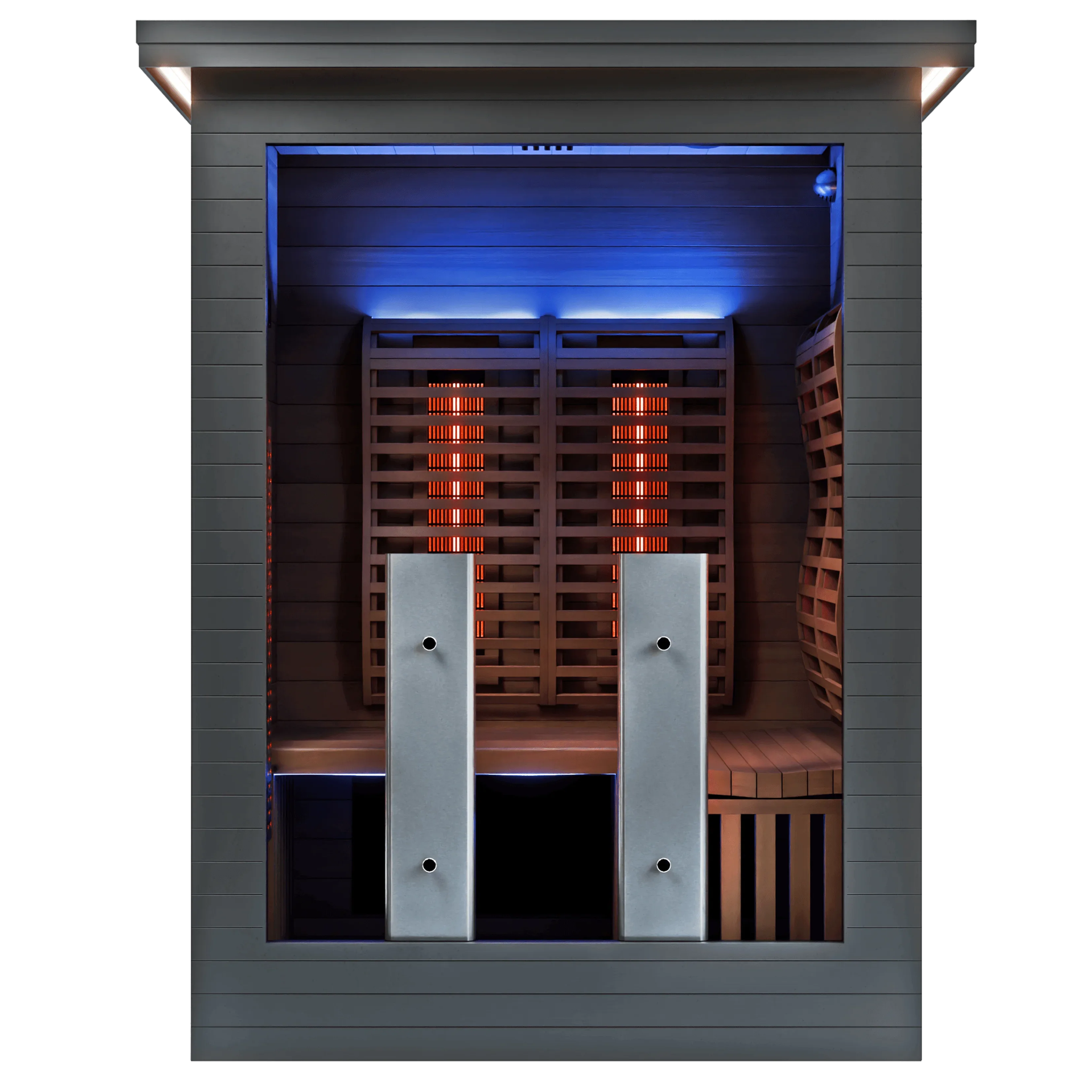
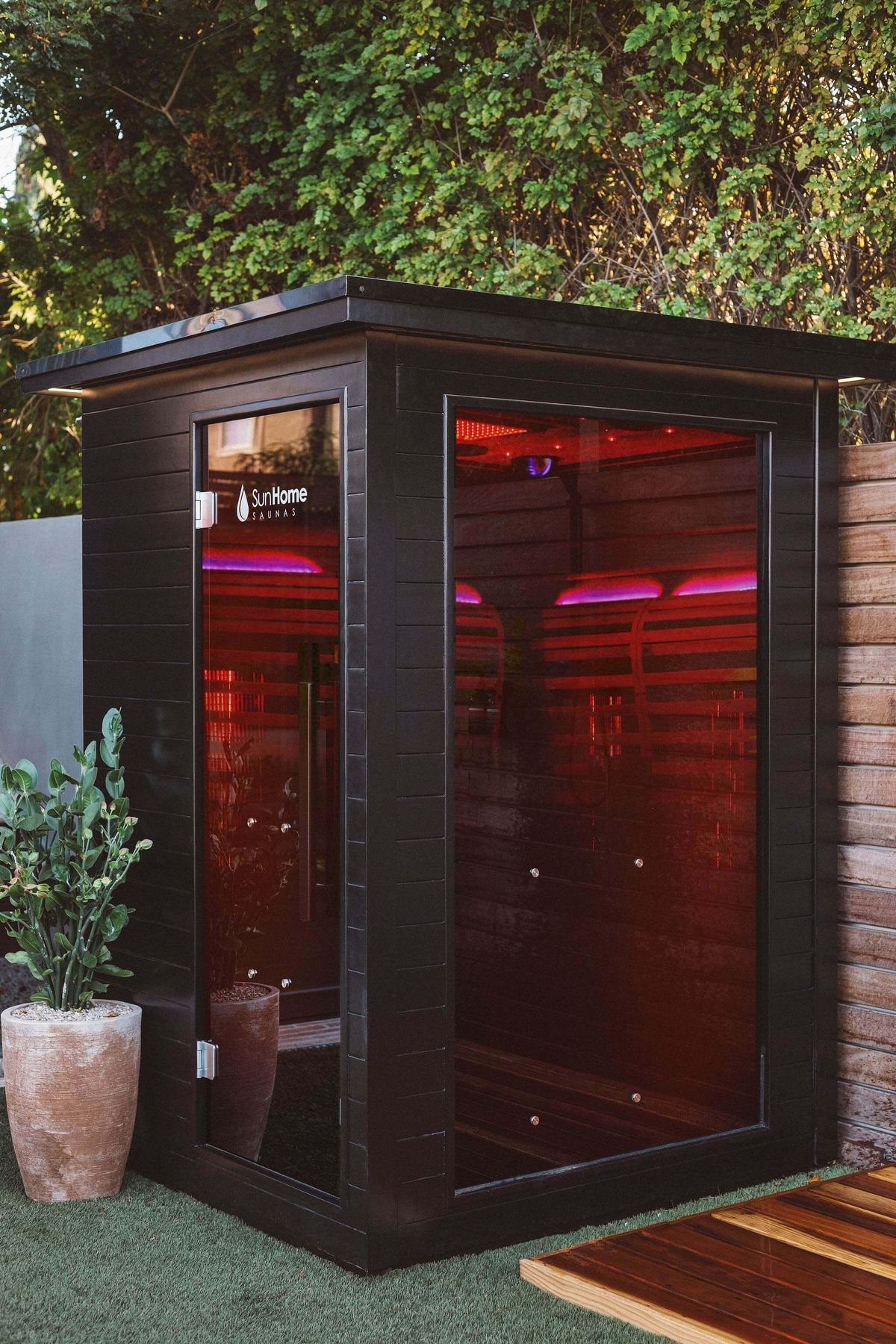
The Luminar 2-person is a premium-priced, full-spectrum outdoor infrared cabin with a heavy electrical load and a heavy body. The product page lists it at $11,599 with free shipping. On paper it is well specified: cedar interior, aluminum exterior, a cover in the box, and a listed 170°F top temperature. What I can't tell you is how it feels to use, how loud it is, or how it ages after five winters. Nobody I've read has given me solid evidence on that, and Sun Home's own pages obviously won't.
My short read: it makes sense if you already want an outdoor infrared sauna, have a spot near your electrical panel, and can live with a $12,000-plus total after electrical and site work. It makes much less sense if you only want to try infrared heat. Indoor 2-person models from the same company are listed at $6,199 to $6,799.
Sun Home Luminar specs and what the maker says
Everything in this table comes from Sun Home's own pages, so read each row as a claim, not a measurement.
| Item | What the page lists |
|---|---|
| Price | $11,599 (checked 2026-10-06) |
| Footprint and height | 51.5" long, 57" wide, 82.7" tall |
| Door opening | 24" |
| Weight | 970 lbs |
| Heaters | 3 far-infrared main heaters, 6 full-spectrum secondary heaters |
| Max temperature | 170°F |
| EMF | Listed as under 0.5 mG |
| Power | 240V, 20A dedicated circuit, 4,800W, NEMA L6-20P locking plug, GFCI required |
| Interior | Canadian Red Cedar |
| Exterior | Aerospace-grade aluminum |
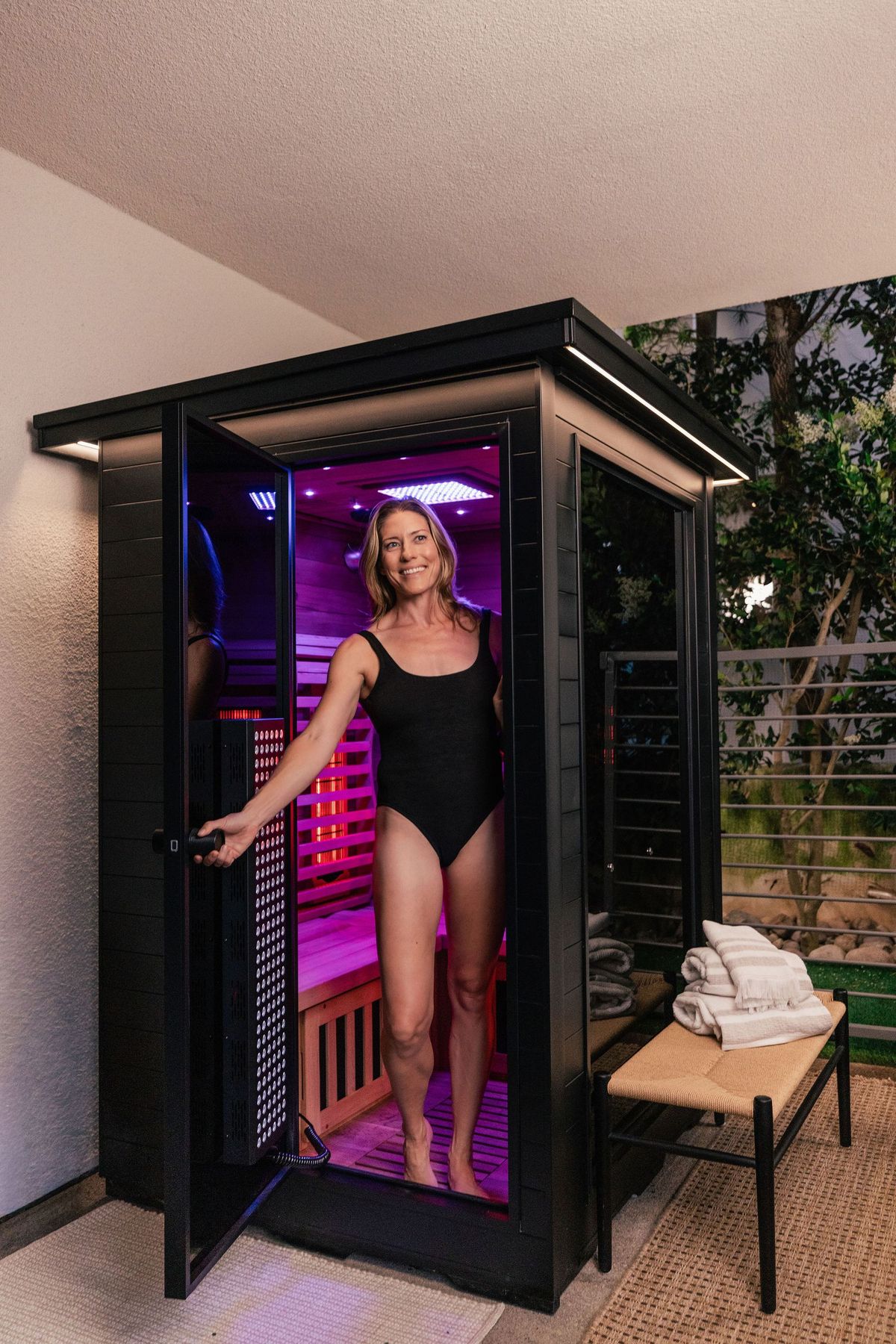
| Extras | Oxygen ionizer, chromotherapy LED, Bluetooth and USB audio, app control over 2.4GHz Wi-Fi, all-weather cover |
| Red light upgrade | Optional, $1,699 |
| Shipping | Free US shipping |
| Assembly | Prefabricated panels, two or more people, about half a day |
A few things stand out. The 4,800W figure is the one most people skip past. It comes from Sun Home's electrical overview, which lists the 2-person Luminar at 240V and 20A. Dividing watts by volts gives 4,800 / 240 = 20 amps (my arithmetic), which means the unit alone fills a 20A circuit on paper. That's a lot of sauna on one breaker, and it's why the dedicated circuit isn't optional.
The page also says the sauna "operates below 25°F, though cold ambient air extends warm-up time". That's a maker statement, with no warm-up times attached. I could not find a Luminar-specific warm-up figure on the pages I opened.
Who this 2 person outdoor infrared sauna suits
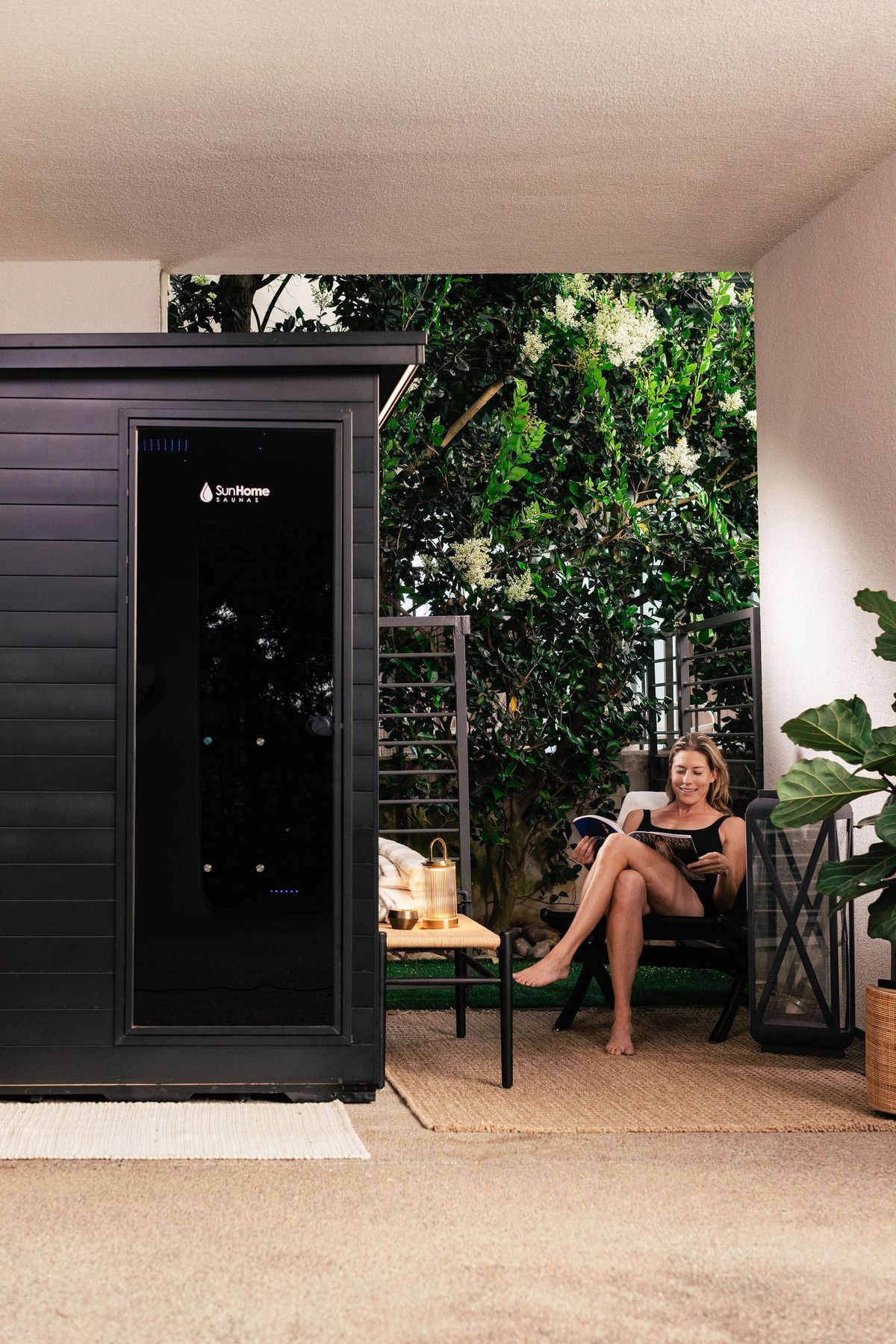
If you want a backyard sauna that uses infrared panels instead of a stove, and you'd rather not build a cabin, the Luminar is a finished product that arrives on pallets and goes together in roughly half a day, according to the maker. That's the real appeal. You skip framing, roofing and a wood stove, and you keep the footprint down to about 51.5 by 57 inches.
It also suits someone who already has an outdoor electrical run, or a garage panel close to the spot where the sauna will sit. Peak Saunas, a retailer of infrared saunas, puts its own estimate for outdoor electrical work at $800–$2,500 and says to keep power access within 50 feet of the panel. Those are a seller's ballpark figures for its own products, not quotes, but they show how fast the extras grow.
And it suits people who want one finished box with lighting and audio built in. The page lists chromotherapy LEDs, Bluetooth, USB audio and Wi-Fi app control. Whether you'd use any of that is a personal call. I'd rather have a good door seal than a Wi-Fi app, but I haven't seen the unit, so that's taste, not a finding.
Drawbacks I can see from the specs and price
The first is price. At $11,599, the Luminar costs more than the Eclipse 2-person indoor full-spectrum model at $10,599, about $4,800 above the Equinox 2-person at $6,799, and nearly double the far-infrared Solstice 2-person at $6,199. The Luminar's premium buys weather-readiness, as far as I can tell from the listings, not more heat in a 2-person cabin.
The second is weight and delivery. The cabin weighs 970 lbs. Sun Home's shipping policy says delivery is curbside only, outdoor saunas need at least 2–4 helpers plus dollies, and the pallets must be separated and moved by hand to the install spot. If your yard is down a slope, or past a narrow gate, ask Sun Home how it expects you to get the pieces there before you pay.
The third is the electrical load. A dedicated 240V line with GFCI protection, a locking plug and a licensed electrician is required. The page also says the unit needs to sit at least five feet from other electrical devices.
The fourth is the warranty wording, which I cover below, and it deserves its own look.
The fifth is the unknowns. I have no independent noise figure, no measured surface temperature, no energy-use test and no long-term durability data. The EMF figure is the maker's own, and I can't confirm how or where it was measured.
The warranty mismatch
The product page says "Limited Lifetime". The warranty page is more specific. For Luminar orders placed on or after March 2, 2026, it lists limited lifetime coverage on cabinetry and heaters, 3 years on the exterior cabin and controls, and 1 year on LED, glass doors and audio. The first 90 days include labor and shipping. After that, the page says the customer pays shipping and labor.
That matters for an outdoor unit, where the exterior cabin is the part that sees rain, sun and snow. The warranty page also excludes "normal weathering and wear-and-tear, including cosmetic damage," plus damage from improper installation, water exposure and animals or insects. It applies to the original purchaser only, and it requires a dedicated outlet with no power strips or extensions, and installation at least 5 feet from water sources.
So "lifetime" is true for some parts. For the cabin shell it's three years, and a heavy item you'd pay to ship and service after 90 days makes the shipping and labor clause worth reading twice.
Prepare your space
Each point below comes from a page I opened. Anything I couldn't source is under the last-but-one heading.
Electrical. Sun Home says all its saunas need a dedicated circuit and outlet with no extension cords, power strips or surge protectors, and that outdoor installs need weather-protected, GFCI-protected outlets. For the 2-person Luminar the overview lists 240V, 20A, 4,800W and a NEMA L6-20P locking plug. A licensed electrician is mandatory for 240V models. Note that Peak's guide describes a generic 2-person infrared sauna as 1,700–2,400W on a 240V 20A circuit. The Luminar's listed 4,800W is double the top of that range, so don't assume a general guide's wattage applies to this unit.
Siting. Peak recommends level ground within 1–2 degrees, drainage away from the cabin, and avoiding direct afternoon sun on glass. It lists a 4-inch reinforced concrete pad at $500–$1,500, or 4–6 inches of compacted gravel with perimeter framing at $200–$600, and says bare wood decking, asphalt and uncompacted soil are out. These are a retailer's figures, and Sun Home's pages I read don't specify a base, so check with them for a 970 lb cabin.
Buried power. Peak says conduit should be buried at least 12 inches and direct-burial cable at 24 inches. Local code and your electrician decide what actually applies.
Weather. The maker says it's built for outdoors year-round and includes an all-weather cover. Peak suggests a small roof overhang or pergola and treating exterior finishes every 1–2 years, but that's about wood finishes in general. Sun Home calls the Luminar's exterior aluminum, so I can't say whether that upkeep applies here.
Cold. Peak says to add 10–15 minutes of warm-up at 32°F and 20–25 minutes at 0°F for infrared saunas generally. Treat that as a generic guide, not a Luminar number.
Delivery and assembly. Free shipping, curbside, liftgate and notification standard, in-stock items shipped within 7 business days. Inspect every box and write damage on the bill of lading, then open boxes within 5 business days. Don't leave crates out in the weather. Assembly is about half a day for two or more people.
Health. Harvard Health says saunas appear safe for most people, but that people with uncontrolled high blood pressure and heart disease should check with their doctors first. I'd add that anyone who is pregnant or unsure should ask a doctor too. I'm not making any benefit claims here, and the Harvard page itself is light on clinical evidence.
How it compares
Inside Sun Home's own range, the nearest indoor full-spectrum rival is the Eclipse 2-person at $10,599. Its electrical overview lists 120V, 30A and 2,820W for that model. The Equinox 2-person is $6,799 and the Solstice 2-person far-infrared is $6,199. So you pay $4,800 to $5,400 more for the Luminar than for the two cheaper 2-person indoor options (my arithmetic: 11,599 minus 6,799, and 11,599 minus 6,199). If you have a dry garage or a spare room, that gap buys a lot of other things.
For traditional outdoor, the Sun Home Solaris Small is listed at $37,199 and the Medium at $46,199. That's a different category (stove heat, a 4–6 person cabin) and roughly three times the Luminar's price, though those listings say nothing about energy use or running costs.
The bigger Luminar 5-person is $14,499 and needs 240V, 30A, 7,200W.
For the wider picture, see my outdoor sauna cost guide and my infrared vs traditional guide. The first covers the line items you'll pay on top of the sticker price. The second covers how the two heat types differ.
Frequently asked questions
How much does the Luminar 2-person cost? The product page lists $11,599 as of 2026-10-06, with free US shipping. That excludes the electrician, the base and any red light upgrade, which the page lists at $1,699. Your total will be higher.
What electrical setup does it need? Sun Home lists a dedicated 240V, 20A GFCI circuit with a NEMA L6-20P locking plug. A licensed electrician is required. I can't tell you your local code requirements, so ask your electrician and your building department.
Can I install it myself? The maker says the panels assemble with two or more people in about half a day. The power connection is a separate job and needs a licensed electrician. The warranty page lists improper installation as an exclusion.
Is the warranty really lifetime? Only for some parts. Cabinetry and heaters carry limited lifetime cover, while the exterior cabin and controls are listed at 3 years and LED, glass doors and audio at 1 year. After the first 90 days you pay shipping and labor.
Does it work in winter? The maker says it operates below 25°F, though cold air lengthens warm-up. I found no Luminar warm-up times, so I can't give you minutes.
Is the Sun Home Luminar worth it? I haven't used it, so I can't judge by experience. The numbers I can lay out: $11,599 for the 2-person model, which is $4,800 above the Equinox's $6,799 list price and $5,400 above the Solstice 2-person at $6,199 (my arithmetic, from the prices I opened). The extra money buys an outdoor build with an all-weather cover and a rating to operate below 25°F, according to the maker. If you do not need to put an infrared sauna outside, the indoor models cost much less.
What I could not verify
- Warm-up time from cold, in any temperature.
- Noise, surface temperatures and real energy use. Using the listed 4,800W, one hour at full draw would be 4.8 kWh (my arithmetic: 4,800 W x 1 hour / 1,000), but I haven't seen how often the heaters actually cycle, and I'm not using an electricity rate I haven't sourced.
- Whether Sun Home specifies a base or pad for the 970 lb cabin.
- Delivery lead time for this model beyond the general "in-stock items ship within 7 business days".
- How the EMF figure was measured.
- Independent reports of long-term durability.
- Whether any health benefit claim holds up. I'm not making one.
- Whether Peak's outdoor maintenance advice applies to an aluminum exterior.
What I would do
If I wanted a backyard infrared sauna and the budget stretched to $11,599 plus site and electrical work, I'd shortlist the Luminar and email Sun Home three questions before paying: what base they require for 970 lbs, what the cabin-shell coverage means in practice after the 3-year mark, and how a curbside pallet delivery gets to my exact spot. I'd also get an electrician's written quote for the 240V, 20A GFCI run before ordering, because that number decides whether this sun home luminar review ends in a purchase.
If I only had a spare room, I'd skip it and look at the indoor models at $6,199–$6,799. And if you have heart or blood pressure concerns, talk to a doctor first.