Most pages about a cold plunge tub hand you a ranked list and a link. I wanted something you can check, so every figure here traces to a page I opened, and where a listing left a gap I say so. The comparison table above puts the 7 tubs I cover side by side, so I won't repeat it. This page covers what comes before picking a model: which type of tub, where it goes, what your outlet has to supply and what a cold plunge really costs over time. I haven't tested any of these tubs. I describe what makers and sellers say, not what the water feels like.
Types of cold plunge tubs
People use "cold plunge" and "ice bath" loosely, and shops use them even more loosely. The split that matters when you're buying is how the water gets cold and who does the work. There are four setups I found sourced prices for.
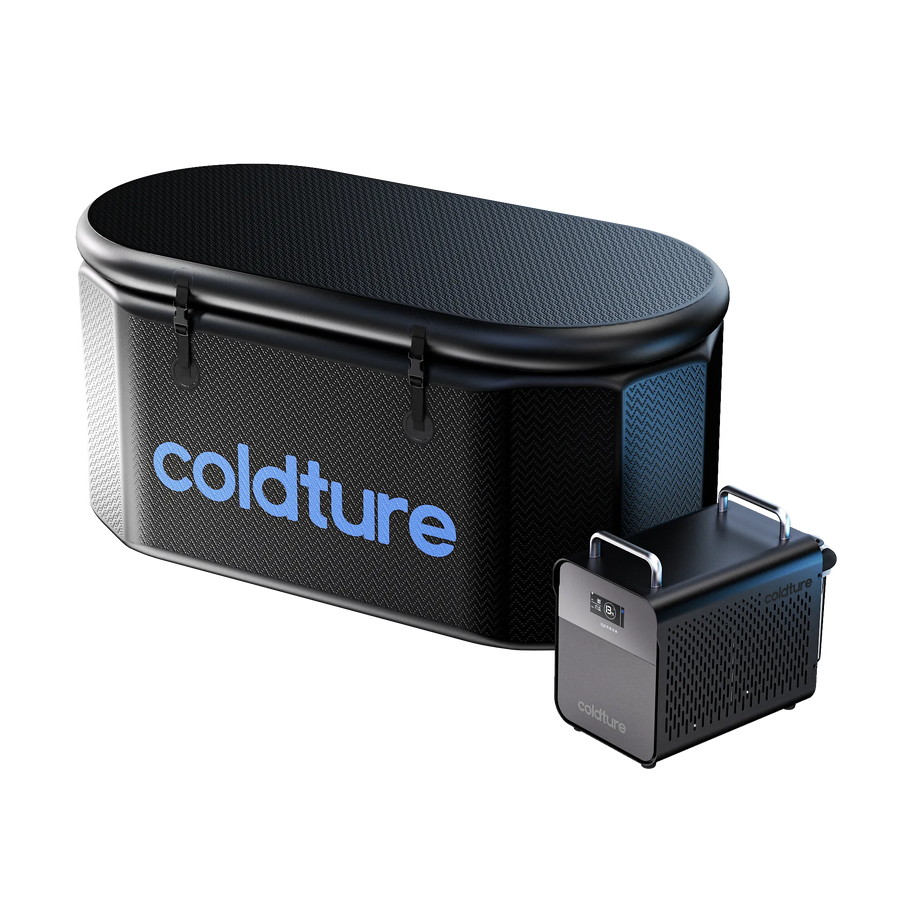
Chiller tub. A tub with a compressor chiller and a pump, so it holds a set temperature. Filtration and ozone usually come with it. All seven tubs in the comparison table are in this group or sold as a bundle with a chiller, from $3,499 (the Coldture sale price) to $11,399 (the Renu Cold Stoic 3.0).
Insulated barrel. An upright barrel with thick walls and ports for a chiller. Ice Barrel lists the 300 at $1,149.99, 77 gallons in a 35.5 by 35.5 inch footprint, and sells it without a chiller. The chiller is a separate $3,999.99 purchase. The 500 plus chiller bundle is the $5,749.98 version in the table. A tub with chiller ports is not a chilled tub until you add one, which is the most common misreading I see in listings.
Inflatable or portable cold plunge. A soft tub you fill and cool with ice. Walmart's category page lists inflatable ice baths from $29.99 to $329.99, with most of the popular ones between $49.99 and $89.99. The Therapod at Sam's Club is $229, and the listing says it is chiller compatible, though the tub itself has no chiller. If you want a portable cold plunge you can store in a closet, this is the category, and the price of getting in is tiny. The cost shows up later, in ice. I didn't find a sourced capacity or filled weight for the Therapod, so I can't tell you what it holds.
DIY chest freezer or stock tank. A freezer converted with an external controller, or a livestock tank with a separate chiller and pump. My DIY cold plunge guide prices both from listings I opened. Parts for a freezer build come to about $360 and for a stock tank with a chiller about $1,669, both before sealant and fittings (my arithmetic, from a $238 freezer, a $36.99 controller and an $84.99 filter pump, or a $98.32 stock tank plus a $1,386.11 chiller and a $99.45 pump). Sun Home Saunas, which sells finished tubs, says chest freezers are not UL- or CE-listed for human immersion. That's a seller's view, but I haven't found a source that says otherwise, and the electrical side is the part I'd pay a professional to check.
If you're still deciding between ice and a machine, my cold plunge vs ice bath guide covers the difference, and do you need a chiller has the break-even math.
Indoor or outdoor cold plunge at home
Neither is better in the abstract. It depends on your climate, your floor and how much you mind a chiller humming near a wall.
Outdoors, the problem is weather. Hydrofarm says to drain and disconnect its outdoor chiller in freezing weather. Sun Home Saunas reports one maker saying its unit won't operate at sub-freezing outdoor temperatures because the pipes can freeze, and lists a maximum ambient temperature of 113°F for another. So the spec that matters for a backyard is the air as well as the water. I found no operating temperature range for most of the seven tubs on the pages I opened, so ask the seller in writing for yours.
Indoors, the problem is the room. A garage, basement or enclosed porch protects the equipment from rain and frost. A chiller moves heat out of the water and into the air around it, which is my own reasoning from how these machines work and not something a listing told me, so I'd leave space around the unit and not box it into a closet. Indoor also means the floor has to carry the tub. Filled weights in the table run from about 900 pounds for the Ice Barrel 500 to about 1,200 for The Plunge, and the Cold Stoic is listed at roughly 1,155. Ask a contractor, not me, whether a second-floor room or a deck can take that.
The Plunge's own page says its All-In model can be used indoors or outdoors. For the other tubs the pages I opened didn't state it, so don't assume.
Whichever you choose, the tub needs a flat, firm spot, a GFCI-protected outlet within cord reach and room to drain the water. A cold plunge at home is an appliance next to a lot of water, and the Electrical Safety Foundation International advises GFCI protection for outdoor devices and an electrician's inspection for pools and spas. That page is about pools and spas and not plunge tubs, so I'm borrowing the principle.
What to look for in a cold plunge tub
Here's the order I'd check things in: size, power, water care, weight and placement, then warranty. The comparison table above carries the model numbers. This section tells you which columns matter.
Water capacity and size
Capacity is listed in gallons or liters, and it varies a lot between brands. The table shows about 105 gallons for The Plunge, 95 gallons filled for all three Renu models, 94 gallons for the Ice Barrel 500 per a retailer, up to 135 gallons for the Dynamic and 400 liters for the Coldture. By my arithmetic, 400 liters divided by 3.785 liters per gallon is about 106 gallons.
Capacity matters because more water holds its temperature better and takes longer to cool. Interior dimensions matter more than exterior ones for your body. The Cold Stoic's interior is listed at 40 by 25 by 31 inches, and a 25 inch width is a number to hold against your own shoulders. Makers also publish height limits: Renu says the Vero fits users up to 6'6" and Ice Barrel says its 500 fits most people up to 6'9". Those are maker claims, and I haven't sat in either.
Depth is the other variable. The Coldture lists a tub that is 26.3 inches tall, which is shallow next to the Vero at 39 inches. Whether a shallow or deep tub suits you is personal. I can't judge it from a spec sheet.
Chiller and electrical
This is the part you can't fix after delivery. Five of the seven tubs list a 120V/15A requirement, the Coldture lists 8A on a standard 15A outlet, and the Ice Barrel pages I opened didn't list the chiller's voltage or amperage at all. None of them asks for a 240V circuit, which is a relief compared with a sauna.
A 15-amp circuit is not unlimited, though. 120 volts times 15 amps is 1,800 VA (my arithmetic), and Renu lists 1,080 watts of cooling draw for the Vero. That is most of what the breaker allows, so a dedicated circuit is not a luxury. Renu recommends one for the 3.0 and the Vero. If the nearest outlet also feeds a garage freezer or a pool pump, call an electrician before you click buy.
Chiller size is quoted in horsepower, and it isn't comparable across brands. Renu lists 0.25 HP (Cold Stoic 2.0), 0.5 HP (3.0) and 0.8 HP (Vero), The Plunge a 1/2 HP chiller, and Dynamic a 1 HP motor with a 0.8 HP compressor, a wording I'd ask the seller to explain. Cooling speed claims are more useful and just as unverified: Plunge says its standard chiller gives 4–6 degrees per hour and the Pro 8–10, and Dynamic's own pages give two different cooling rates. Ask for the time from your tap temperature to your target at your air temperature.
My cold plunge temperature guide explains why the lowest listed number (37°F or 39°F) is a capability and not a recommendation.
Filtration and water care
A filtered tub lets you keep the water for weeks. Sun Home Saunas says unfiltered tubs need fresh water every 2 to 5 days while filtered, sanitized systems can run 8 to 12 weeks. That is a retailer's guide, so treat it as a rough band.
The tubs differ on paper. The Plunge lists a 20-micron filter plus ozone, Dynamic lists 20-micron filters, the Vero lists a 50-micron filter with ozone, and the 2.0 describes "advanced filtration and ozone purification" with no rating. The Coldture listing gives no micron rating and no mention of ozone, and Ice Barrel describes a stabilizer accessory instead of a filter system. A micron number tells you what a filter catches on paper and says little about your water, so I wouldn't shop on it alone. Do read the maintenance steps before you buy.
Replacement filters are a running line item. Ice Barrel lists a single chiller filter at $9.00 and a three-pack at $26.99. One maintenance guide says to replace filters every 1 to 3 months depending on use. Assuming one filter per swap (my assumption, since I don't know how many your chiller takes), that is 4 to 12 filters a year, or about $36 to $108 at $9 each.
Weight and placement
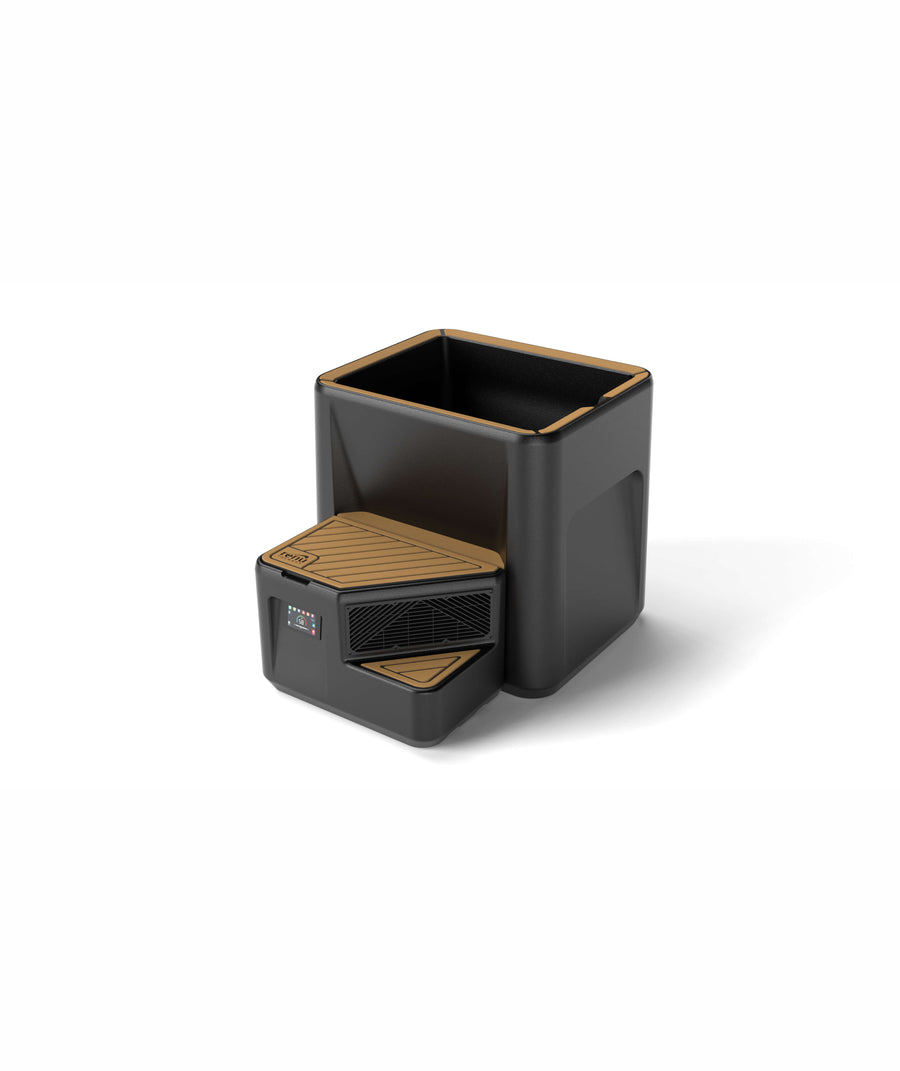
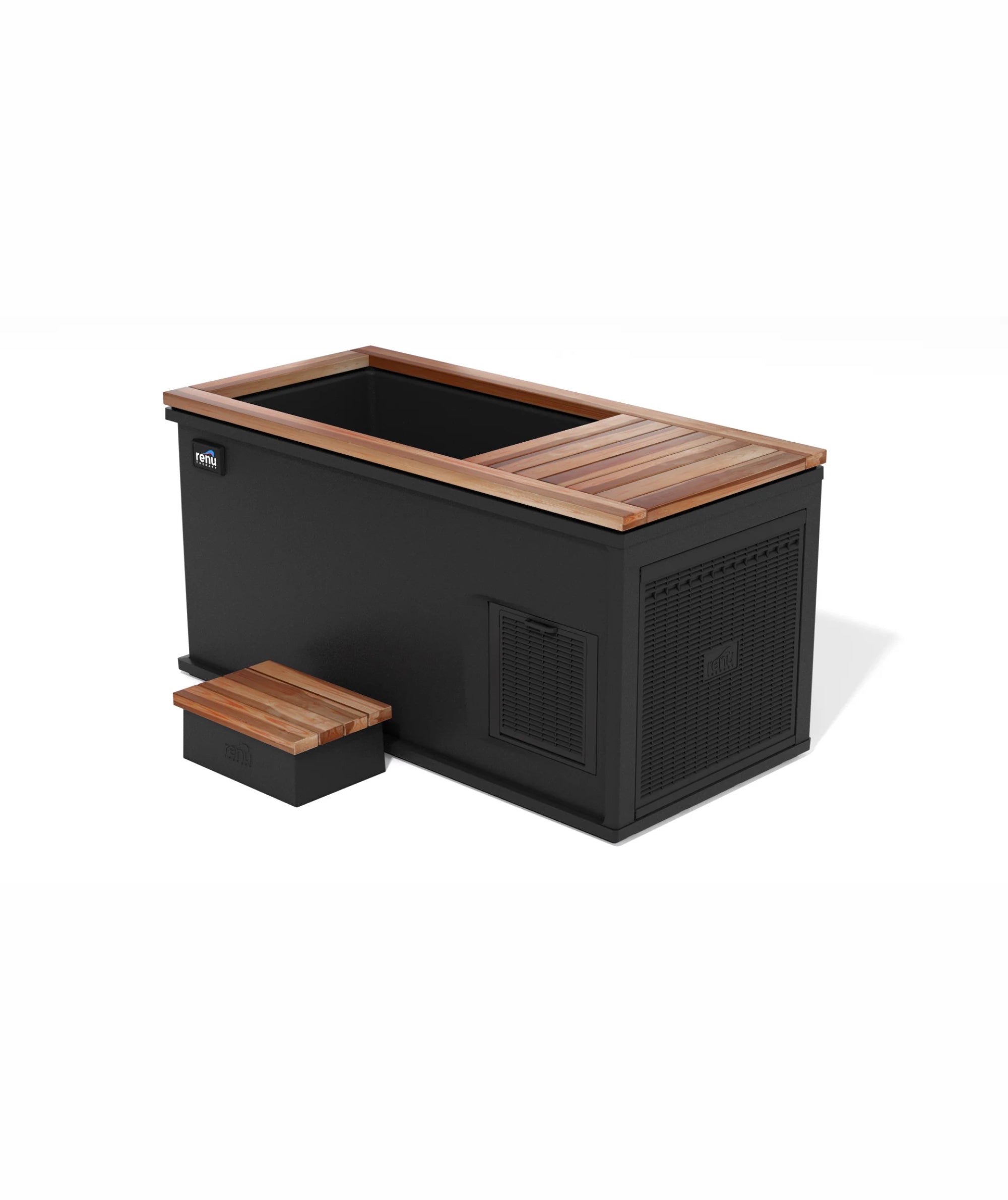
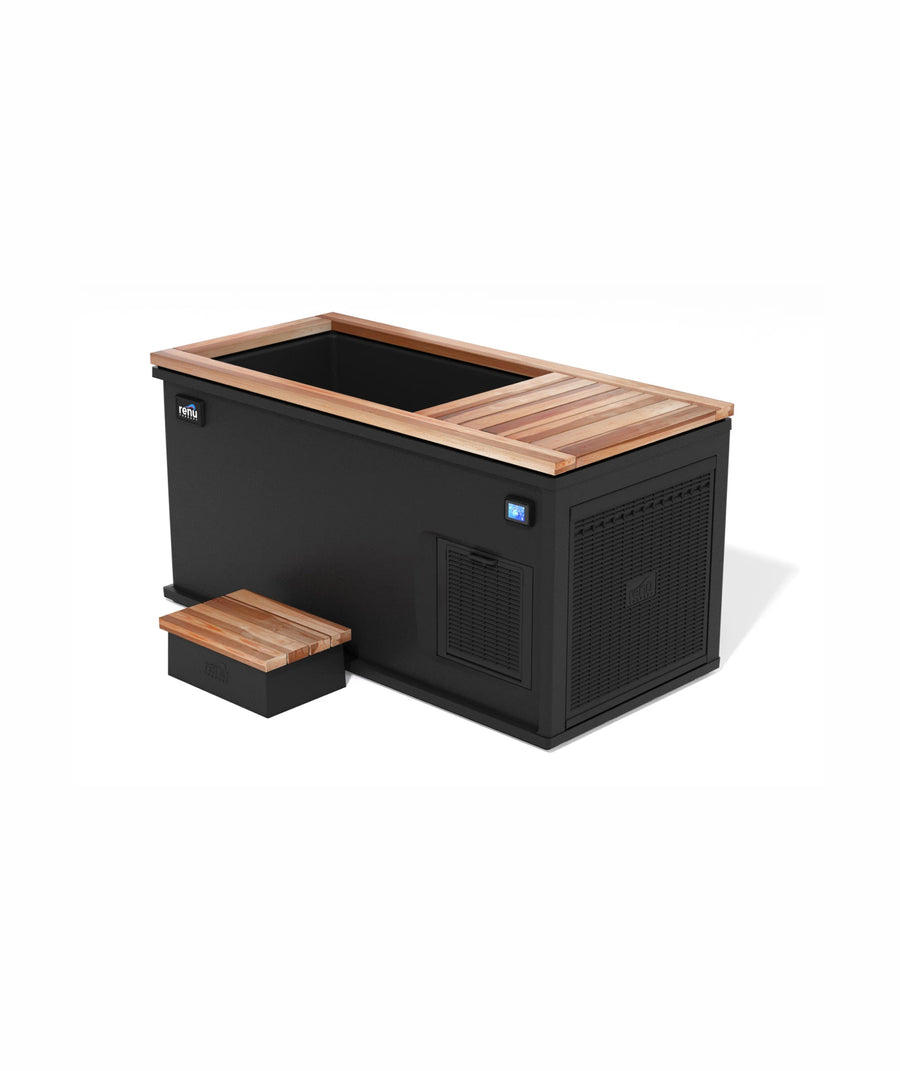
Measure the path before the pad. Weights in the table run from 175 pounds empty for The Plunge to 365 for the Cold Stoic and, filled, to roughly 900 to 1,200 pounds. The Ice Barrel 300 is listed at 61 pounds empty and 700 filled. Renu lists free curbside delivery on the 3.0 with a 3 to 5 week ship time, so plan for helpers to carry it from the curb. I couldn't verify which sellers offer inside delivery.
The Plunge's own pages give two different filled weights, 1,200 pounds on the tech-specs page and about 1,020 on its product page. I'd plan around the higher figure and ask.
Warranty
The gap here is wider than in sauna shopping. Renu lists 5-year limited warranties on the 2.0, the 3.0 and the Vero. Ice Barrel lists a limited lifetime warranty. The Plunge lists 12 months, Dynamic 1 year limited and the Coldture 1 year on tub and chiller. A chiller is the part most likely to be expensive to fix, so I weigh the warranty as heavily as the sticker. I haven't read any warranty's fine print line by line, and "limited lifetime" can mean a lot of things, so read the actual document.
What a cold plunge really costs
The cold plunge price on the tag is the first of several lines. I snapshotted the table prices on 2026-10-06, and they move with promotions, so check the live listing.
| Line | What I found |
|---|---|
| Inflatable, ice only | $29.99 to $329.99; Therapod $229 |
| Insulated barrel, no chiller | Ice Barrel 300, $1,149.99 |
| DIY freezer or stock tank (parts) | about $360 and about $1,669, my arithmetic |
| Chiller sold separately | Ice Barrel $3,999.99; Dynamic $3,499 (0.8 HP) or $3,699 (1 HP); Renu 1/4 HP $500 |
| Chiller tub, low end | Coldture + Chiller Pro $3,499 sale, $3,999 regular |
| Chiller tub, middle | The Plunge $5,990; Ice Barrel 500 bundle $5,749.98; Vero $7,200 cold only |
| Chiller tub, high end | Dynamic $8,495; Cold Stoic 2.0 $9,499; Cold Stoic 3.0 $11,399 |
Two notes on that. First, The Plunge's price depends on which page you read. The product page I used for the table showed $5,990, marked down from $6,990, while another Plunge page I opened for my cold plunge cost guide showed $6,790. That kind of drift is normal, and it is a reason to buy from the live page and not a table. Second, the Cold Stoic 2.0 costs more than The Plunge for a chiller that is half the size on paper (0.25 HP against 1/2 HP). The extra money buys a 5-year warranty and a different build, and you decide whether that is worth about $3,500 more (my arithmetic: 9,499 minus 5,990).
Running cost, with the formula
The chiller is almost the whole electric bill, and the formula is short.
Monthly cost = watts ÷ 1,000 × hours running per day × 30 × your price per kWh.
The EIA projects a US average residential price of 18.2 cents per kWh for 2026. Your utility will differ, so use the number on your bill. The hard input is hours running, because a compressor cycles on and off to hold a temperature and nobody publishes a duty cycle I could verify. So the hours below are placeholders I picked, not measurements. This is my arithmetic, using the cooling draw Renu lists and an assumed 6 hours a day at full draw:
| Tub | Cooling draw | kWh per day | Per month at $0.182 |
|---|---|---|---|
| Cold Stoic 2.0 | 450 W | 2.7 | about $14.74 |
| Cold Stoic 3.0 | 518 W | 3.1 | about $16.97 |
| Renu Vero | 1,080 W (product page) | 6.5 | about $35.38 |
For a rough cross-check, the PlungeBox 1/2 HP chiller page says its 500 watt unit uses around 1.4 to 1.8 kWh a day, which would be about $7.64 to $9.83 a month at the same rate (my arithmetic). Real use depends on insulation, the lid, your climate and how often you open the tub. My cold plunge electricity cost guide has more worked rows and a table that varies the rate by state.
Renu's own Vero spec sheet lists a lower cooling figure, 580 W at 5 A, so the Vero row could be about half of what the table shows. My Renu Vero review lays out the mismatch, and I'd ask Renu which number is right.
Ice cost, if you skip the chiller
I only price ice from sources I opened. ThePricer lists a 10 lb bag at $2 to $5, so about $0.20 to $0.50 per pound, and Coldture says a standard tub needs 20 to 40 lb of ice depending on the starting water and the target. My arithmetic: at $0.20 per pound, 20 lb is $4 and at $0.50 per pound, 40 lb is $20 per fill. If you plunge twice a week and refill every time, that is roughly $400 to $2,000 a year, which is the reason a chiller can pay off for frequent users. If you keep the water between sessions the bill drops, but I found no reliable figure for how much.
Everything else
Add filters ($36 to $108 a year on my assumption above), sanitizer and water changes, and for a real install the electrician's time if you need a dedicated circuit. I couldn't find sourced prices for sanitizer kits that I could turn into a monthly figure, so I left them out. Over three years the pattern is simple: the sticker price dominates, electricity and filters add up to hundreds of dollars and not thousands, and ice can pass the tub's price if you plunge a lot.
Which cold plunge for which situation
These are decision rules, and each points to a tub in the table above. None of them is a ranking.
- You have one shared outlet. Look at the Cold Stoic 2.0, which lists 450 watts cooling, or the Coldture, which lists 8A. The Vero's 1,080 watts is the heaviest draw I found.
- You want the longest coverage. The three Renu models list 5-year limited warranties, and Ice Barrel lists limited lifetime. Everything else I opened was one year or less.
- You want a chiller on a budget. The Coldture bundle at $3,499 is the cheapest in the table. The listing gives no horsepower, filter micron rating or ozone mention, so you trade documentation and a 1-year warranty for money.
- You want one box under $6,000. The Plunge at $5,990 and the Ice Barrel 500 bundle at $5,749.98 are the two. The Plunge documents its circuit and filtration, while the Ice Barrel pages I opened don't list the chiller's electrical specs.
- You're tall. Renu says the Vero fits up to 6'6" and Ice Barrel says the 500 fits up to 6'9". Those are maker claims, so check the interior in person if you can.
- You want hot and cold in one tub. The Vero in hot and cold form is $7,500 and lists 37–100°F. The Cold Stoic 3.0 lists 37–104°F. The Dynamic tops out at 85°F, so it is a cold unit.
- You want the biggest water volume. The Dynamic lists up to 135 gallons.
- You already own a tub. Dynamic sells a chiller alone at $3,499 for 0.8 HP, rated for plunges up to 150 gallons, and Renu lists a 1/4 HP unit at $500. Check your tub's fittings and flow requirements against the chiller's.
- You aren't sure you'll keep using it. Buy an inflatable or a stock tank, use ice for a season and track what you spend. If ice runs past a few hundred dollars, you've learned something.
- You have a small yard or need to store it. Look at the inflatable category for a portable cold plunge, accepting that you're back to ice.
If you're comparing the tubs that include a chiller one at a time, my cold plunge with chiller roundup walks through each of the seven with the gaps I found.
Frequently asked questions
What is the best cold plunge tub to buy? It depends on your outlet, your budget and how much warranty you want. On paper I like the Renu Vero for its 0.8 HP chiller, 37°F floor and 5-year warranty, and The Plunge if $5,990 is your ceiling. I haven't tested any of them, so treat "best cold plunge" as a shortlist, not a verdict.
How much does a cold plunge cost? Cold plunge cost runs from about $30 for the cheapest inflatable to $11,399 for the Cold Stoic 3.0. Among the seven chiller tubs I compare, the shown prices span $3,499 to $11,399. Then add filters, electricity and ice if you use it. My cold plunge cost guide shows the arithmetic.
Is a cold plunge at home worth it? That is partly a habit question and partly a money one. Harvard Health calls the evidence thin and warns that the cold shock can raise heart rate and blood pressure. Cleveland Clinic describes some benefits as preliminary. I can't make benefit claims, so the case for me is whether you will actually get in often enough to justify the price.
Do I need a chiller for a cold plunge? No. Ice works, and the amount of ice scales with how warm your water starts. A chiller buys convenience and a steady temperature, and on pure dollars it pays back mainly for frequent users or people with warm tap water. The do you need a chiller guide has a break-even table.
Do I need a 240V circuit for a cold plunge tub? Not for the seven tubs I compare. Five list 120V/15A, the Coldture lists 8A on a standard 15A outlet, and the Ice Barrel pages I opened gave no electrical figures. Get a dedicated 15-amp circuit confirmed by an electrician anyway.
How cold should a cold plunge be? Cleveland Clinic says to avoid going below 40°F (4°C) and gives 50 to 59°F (10 to 15°C) as a safe starting range. Tubs advertise 37°F or 39°F, which is what the chiller can do and not what anyone recommends. My cold plunge temperature guide lines the sources up.
Can I build my own cold plunge instead of buying one? Yes, and people do. Parts for a chest freezer build came to about $360 and for a stock tank with a chiller about $1,669 in my arithmetic, before sealant and fittings. IceTubs says a freezer build isn't the most beginner-friendly path, and Sun Home says freezers aren't listed for human immersion. If you can't say where every cord goes and which outlet is GFCI protected, don't get in. Read DIY cold plunge first.
Is a cold plunge safe for everyone? No. Cleveland Clinic says to talk to your healthcare provider first and lists heart disease, high blood pressure, diabetes, peripheral neuropathy, poor circulation and pregnancy among the situations where people should check. Harvard Health says people with a heart rhythm disorder such as atrial fibrillation should avoid cold plunges. I'm not a doctor, so ask yours before the first session.
What I would do
If I were buying a cold plunge tub for my own backyard, I'd start by asking two questions: what does my nearest outlet carry, and where does a 1,000-pound tub go. I'd get a written electrician quote for a dedicated 15-amp GFCI circuit at that exact spot, then choose from the table above. With a budget near $6,000, I'd shortlist The Plunge and decide whether 12 months of warranty is acceptable. If I could spend about $7,200, I'd lean to the Renu Vero for the 5-year warranty and the 37°F floor. If I weren't sure I'd keep plunging, I'd buy a $229 inflatable or a stock tank, track the ice spend for a season and only then price a chiller.
I'd skip any tub whose listing didn't state its electrical requirement, its filtration and its warranty term, and I'd ask the seller in writing for the operating temperature range and the cooling time from my tap temperature. I'd keep an extra 10 to 20 percent in the budget for the circuit, delivery help and filters, which is my own judgment and not a published figure. Ask your doctor before you start if you have a heart condition, blood pressure problems, diabetes or are pregnant.